Heatsink
Inside Flipper One, several components generate a significant amount of heat. This heat cannot be trapped inside a plastic enclosure, otherwise some parts operating under sustained heavy load could reach high temperatures and gradually degrade over time.
The device also contains a Li-Ion battery, which should not be heated above 60 °C, as excessive heat accelerates battery degradation and negatively affects its lifespan and safety.
Main heat sources
The main heat sources inside Flipper One are:
- RK3576 SoC. Up to 5.5 W under maximum load (CPU + GPU + NPU simultaneously).
- RK806S PMIC. Up to around 2 W at peak SoC load.
- DDR5 RAM. Up to 1.5 W during memory-intensive operations.
- BQ25792 charger. Up to 1 W while fast-charging the battery.
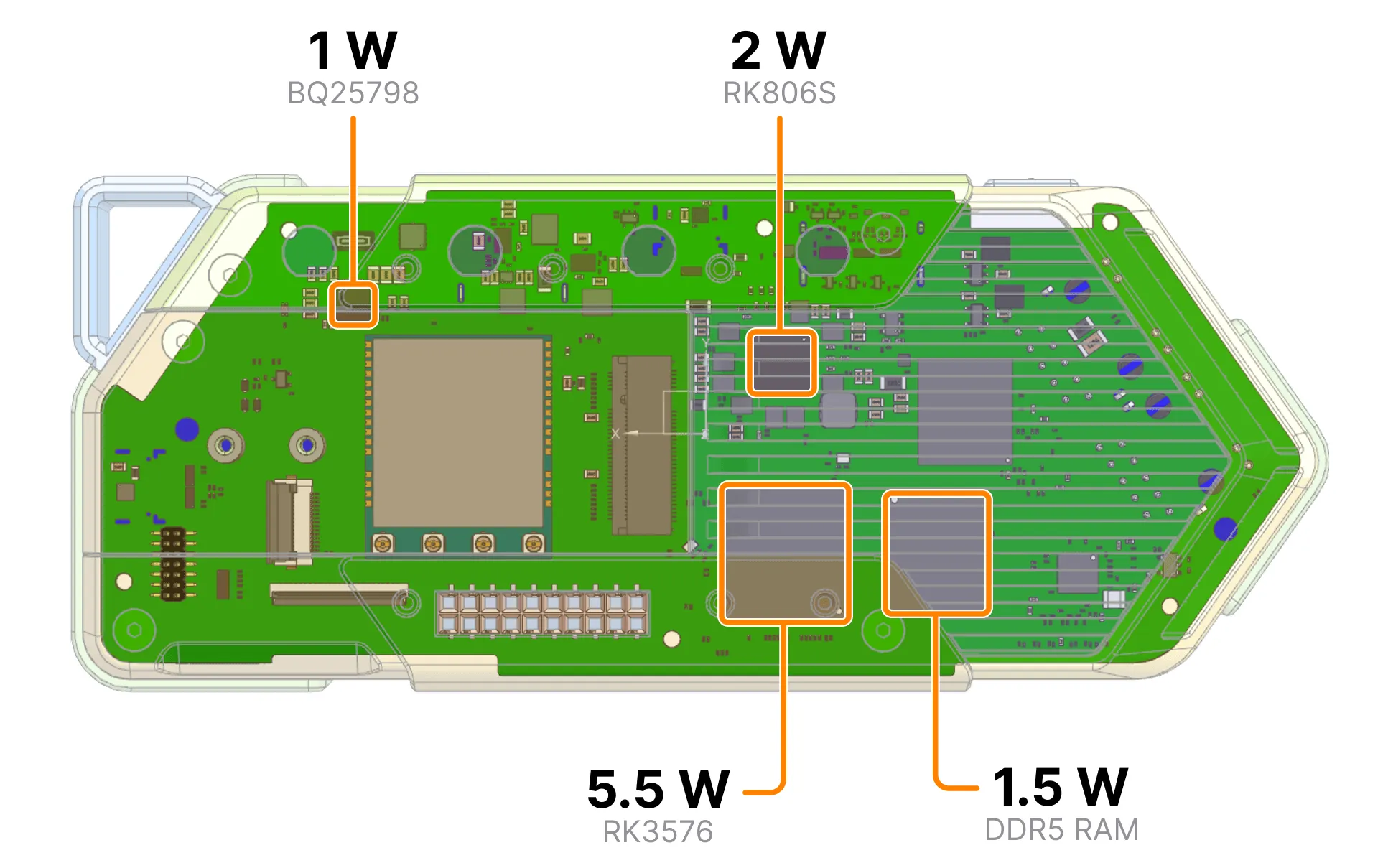
In real-world use, reaching the maximum heat output is difficult. During heatsink testing, we use a synthetic workload designed to push the hardware to its thermal limits.
Integrated aluminum heatsink
Flipper One dissipates heat from its hottest chips through a aluminum heatsink. In addition to thermal management, the heatsink also serves as a structural element, mechanically integrating with the enclosure and the main PCB.
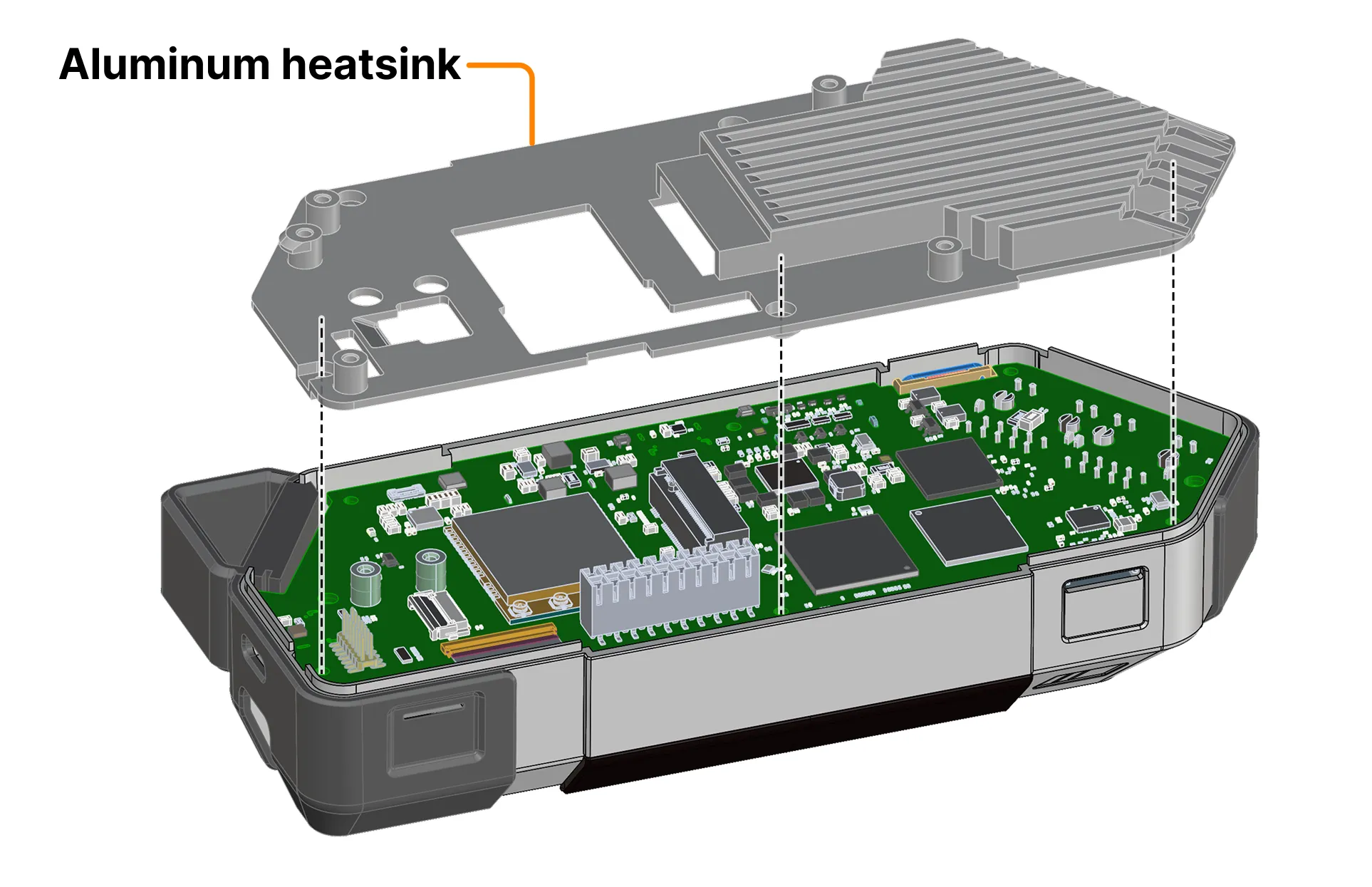
Our preliminary simulations and real-world prototype testing at an ambient air temperature of 21 °C show that this heatsink can maintain the radiator temperature below 50 °C under realistic (non-synthetic) workloads with a thermal load of about 6 W.
At higher loads or higher ambient temperatures, the SoC will reduce CPU core frequencies, while the MCU will disable low-priority peripheral loads, limit charging power, and notify the user of these limits on the display.