#2: New TV Media Box target
This is our Dev Log where we share how the development of Flipper One is going. Updates are grouped by sub-projects, with links, screenshots, and videos so you can explore the details.
In this Dev Log: a new TV Media Box target, Falcon Mode for faster Linux boot, MacBook Pro charging from Flipper One, an MCU firmware RAM/Flash usage dashboard, and more.
🐧 Linux (CPU Software)
- Added a new systemd target tv-media-box with Kodi media player and Chromium web browser (for captive portals). Chromium automatically launches when a captive portal is detected. PR #75. In the future, profile switching will include a reboot into an isolated environment specific to each profile, which you can then reconfigure, break and roll back without affecting the rest of the system. This concept is described on the Flipper OSFlipper OS page. For now, here is a quick demo of the current target-switching implementation to illustrate the software available in different profiles (no isolation yet, so no reboots shown):
- Support for Falcon Mode was added to the Rockchip SPL, enabling direct Linux boot without U-Boot. After power-on it takes 3.5 seconds to start userspace init and 13 seconds to finish it (booting from UFS flash). See the patch set.
- Prepared the Device Tree for the next Flipper One hardware revision 2.F0B1C2. Branch test-f0b1c2.
- Now you can build locally our Linux full-disk images. The last two repositories (rkbin and rockchip-linux) have become public, completing the set of repos required for building images from source. The resulting OS images can be deployed on any of supported RK3576-based boardssupported RK3576-based boards. Learn how to build the OS imagehow to build the OS image.
- SDDM (Simple Desktop Display Manager) now supports binding to specified seats. PR #2179.
- Fixed microSD card initialization when Flipper One is booted from non-microSD storage (e.g. UFS). Commit 9e19452.
⚙️ Mechanics
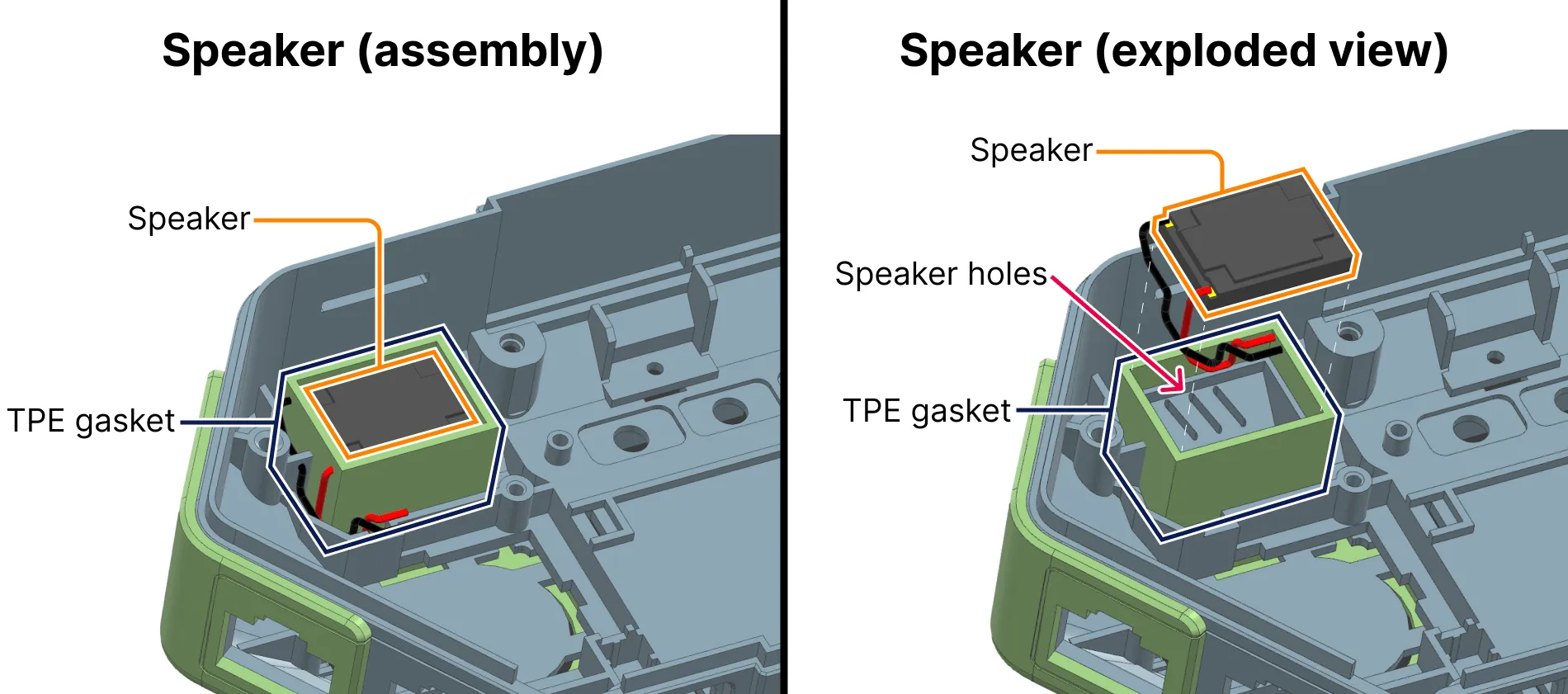
- We selected CMS-151125-18SP-X8 speaker (1W, 15×11×2.5 mm) for the next HW revision of Flipper One. A rubber (TPE) gasket helps seal the speaker so that sound is directed outside the device instead of leaking inside. Issue #23.
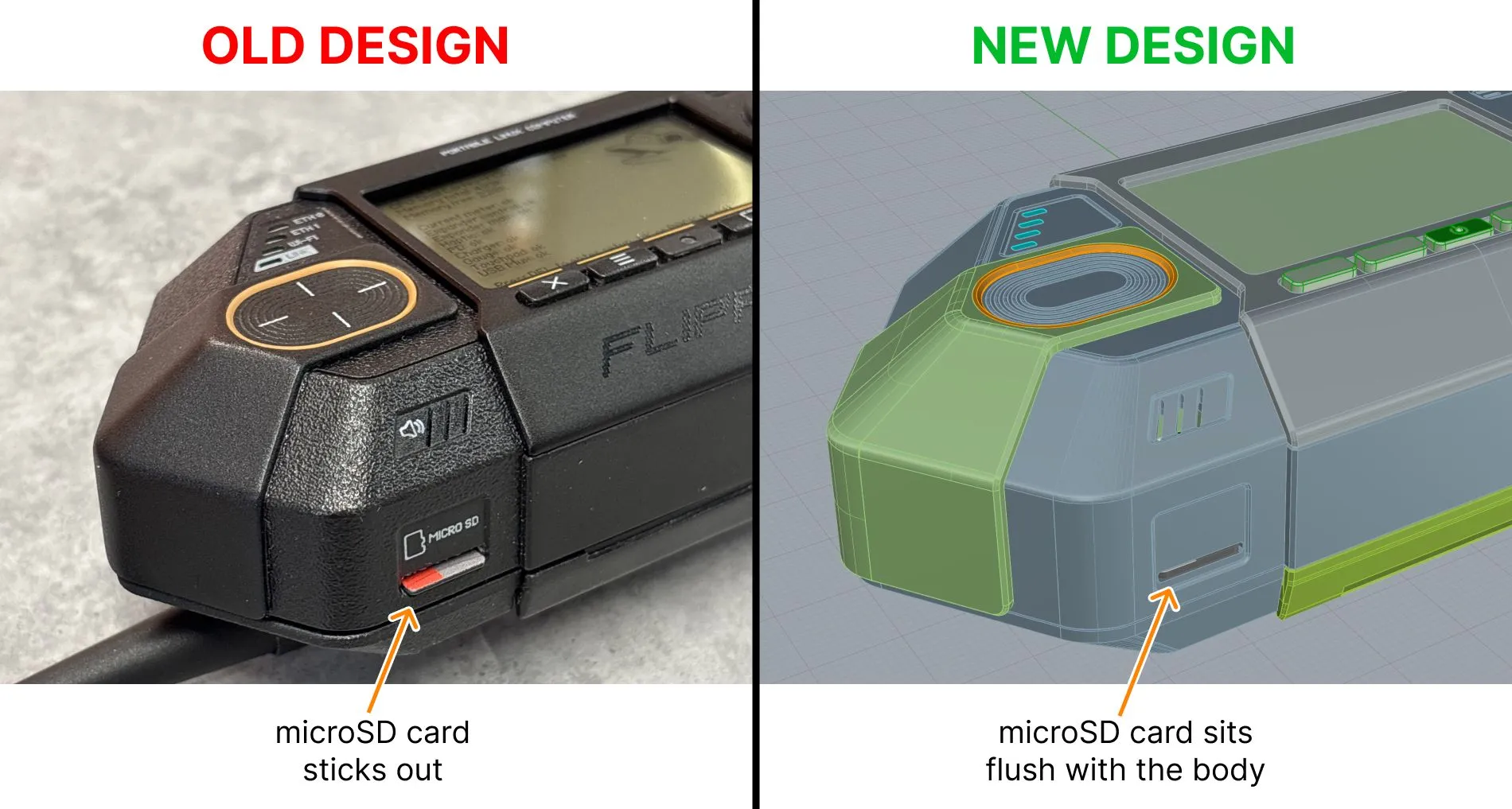
- Fixed the microSD card sticking out issue by moving the slot slightly deeper into the device.
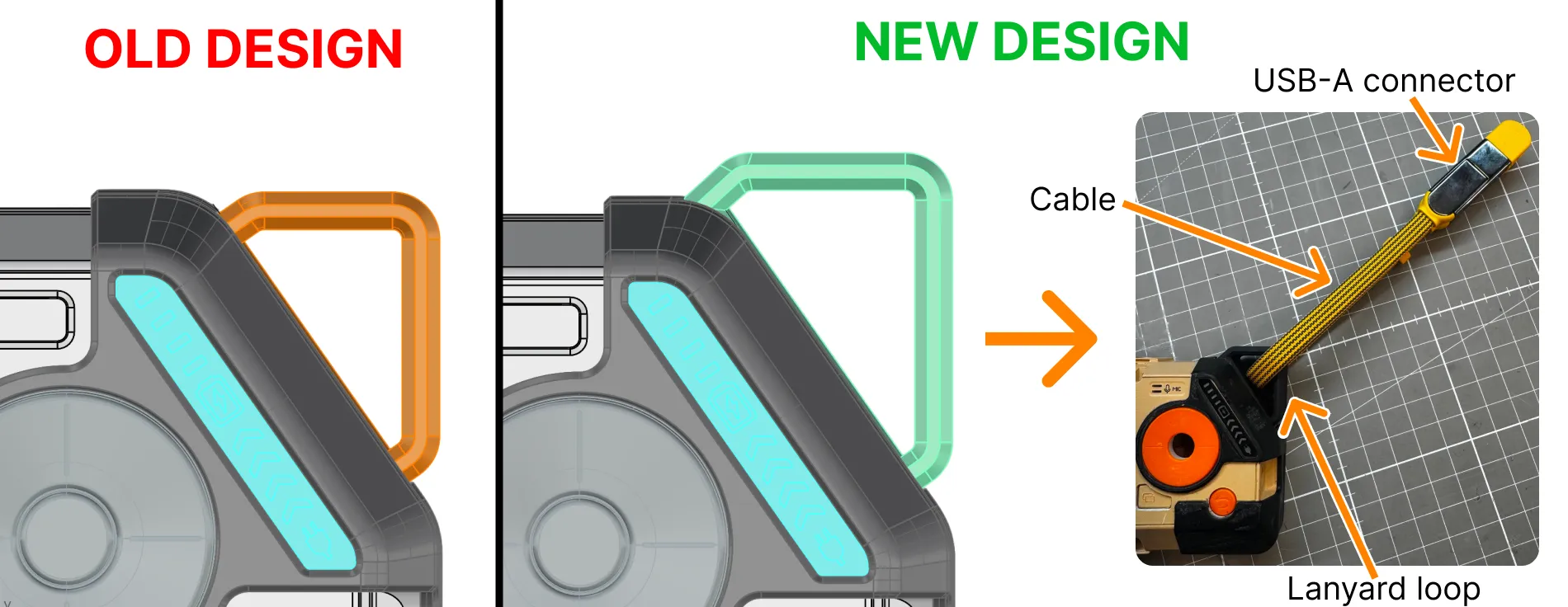
- The lanyard loop has been slightly enlarged. This will allow cables with connectors such as USB-A or Ethernet to be attached for carrying with Flipper One. Issue #26.
🔌 Hardware
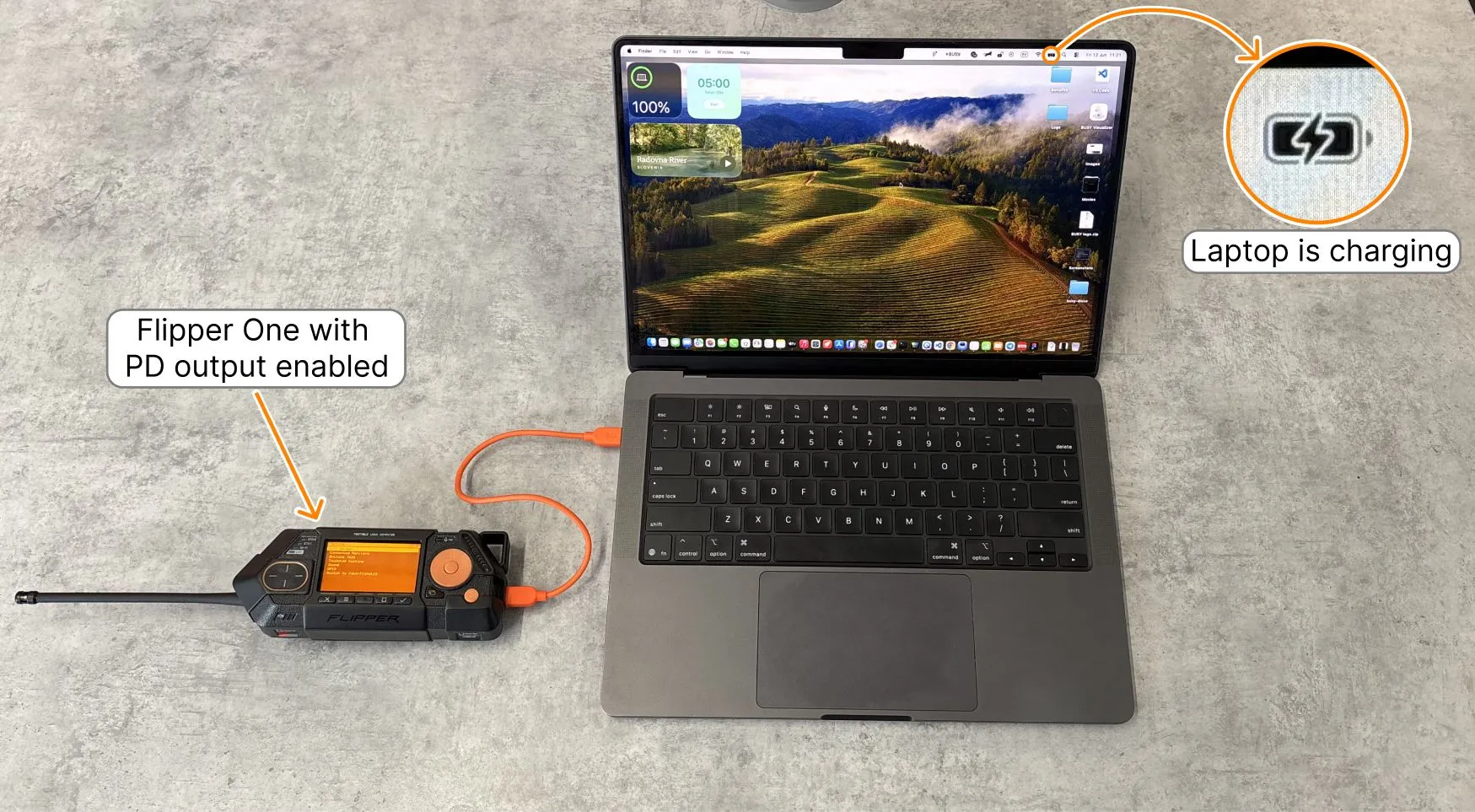
- USB Power Delivery output (USB-C1 port) has been tested up to 15V / 3A. This means Flipper One can charge other USB PD–compatible devices. We still need to fully test it across PD modes and with a wider range of USB PD devices.
- The 5V output on the HDMI port is now protected against short circuits and reverse current using an LPW5202ADB switch. See power subsystem diagrampower subsystem diagram.
- The heatsink is grounded to the main PCB via spring contacts for ESD protection.
🕹️ MCU Firmware
- Debouncing was added to the Headphones service to prevent multiple headphone status update events. This happens when audio is played at high volume through the 3.5 mm jack with no headphones connected. PR #165.
- Added a new GitHub Action to the MCU Firmware repository. It automatically posts an artifact that shows how RAM and Flash usage changed.
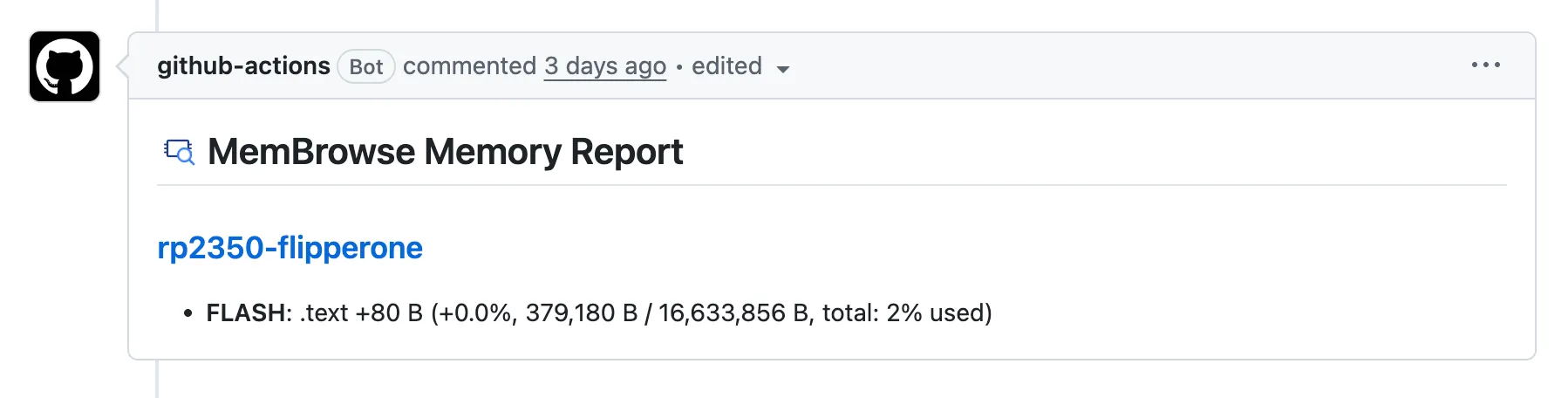
This is powered by MemBrowse, which also generates commit-to-commit graphs of RAM and Flash consumption, making it easier to track anomalies over time. PR #148.
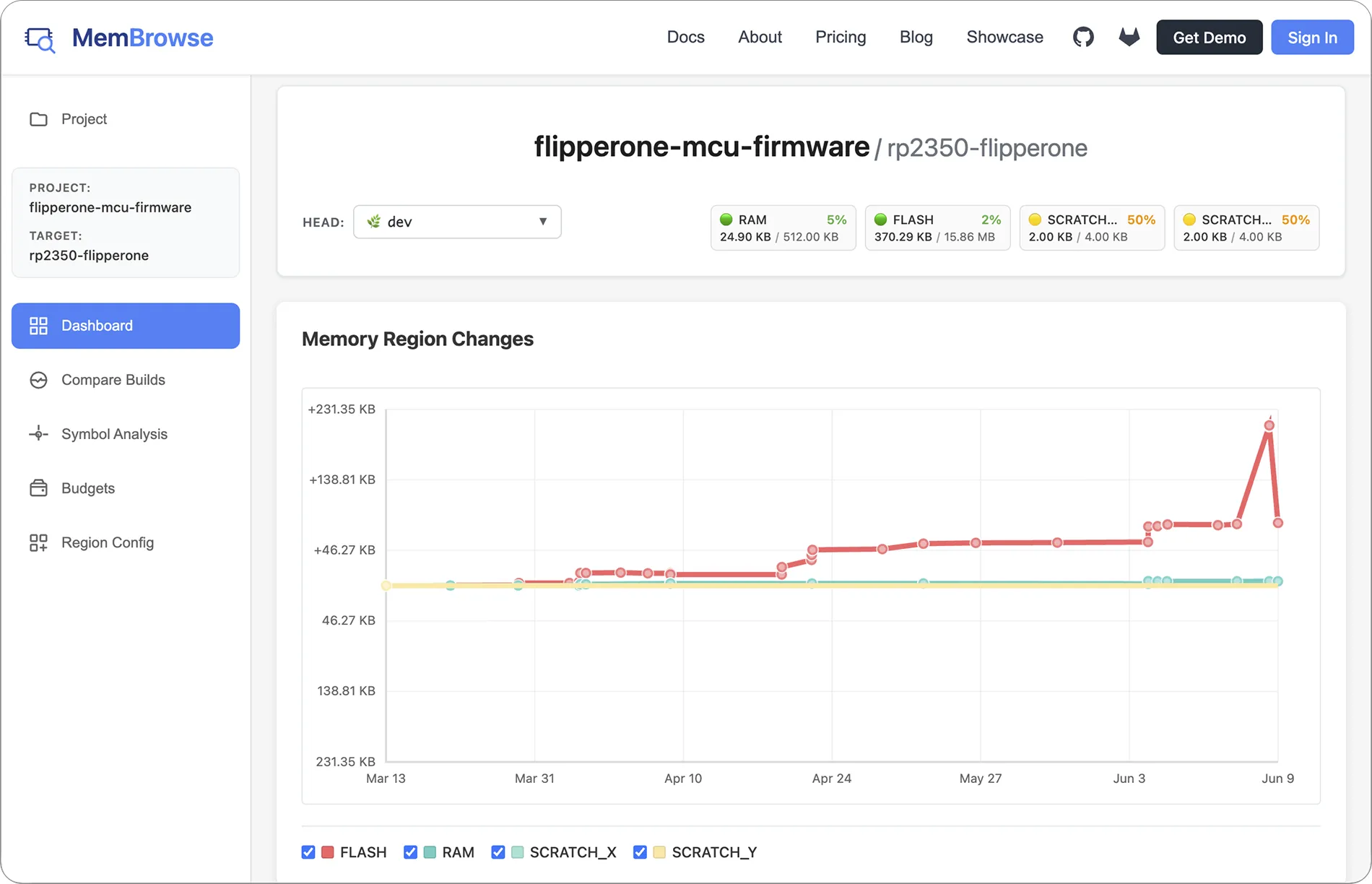
See the MCU firmware MemBrowse dashboard. Thanks to @michael-membrowse for this contribution.
🎨 User Interface
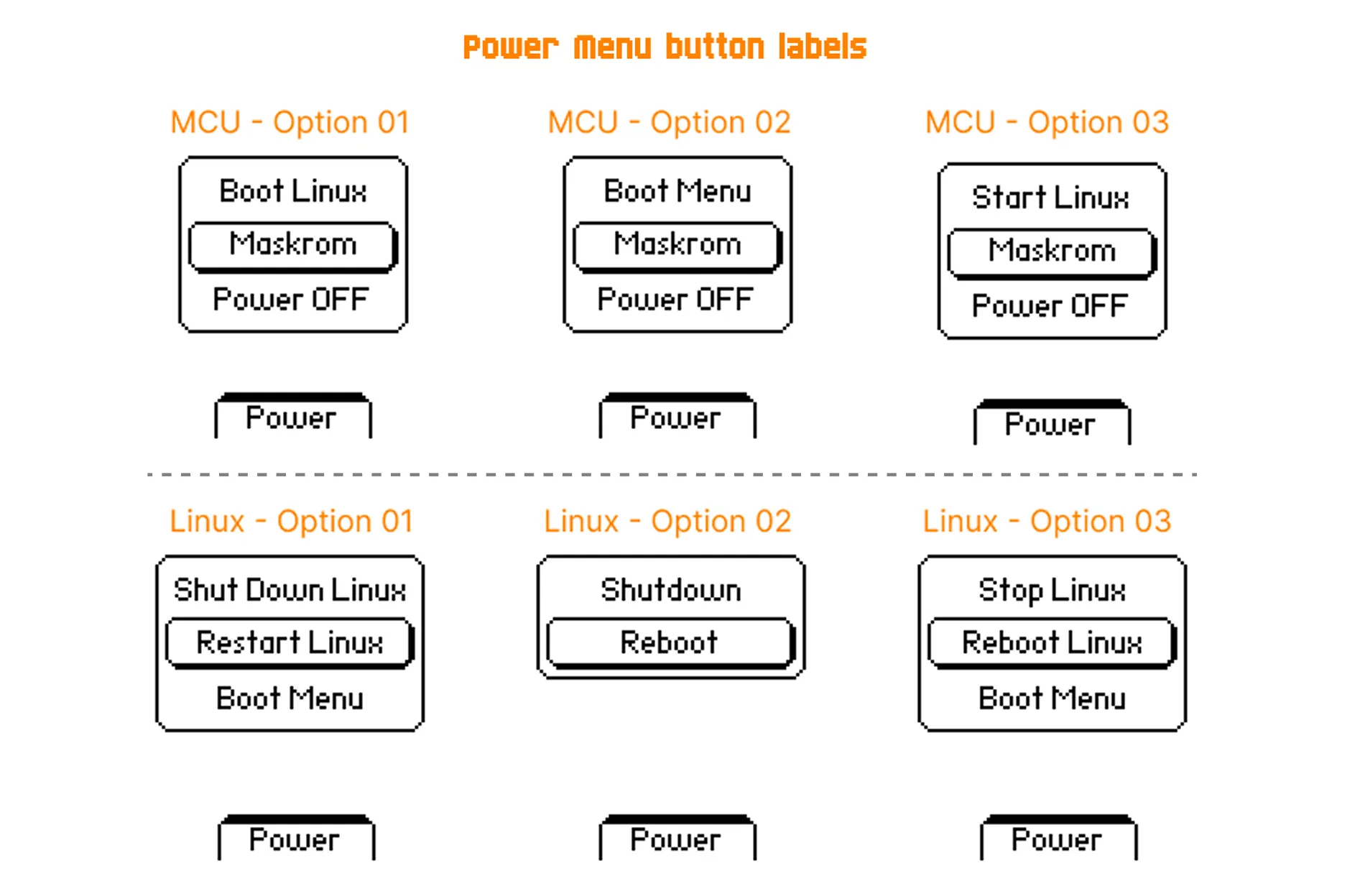
- The UI subproject includes several tasks open to the community. For example, we are looking for the most intuitive labels for the Power Menu, which is used to control the device’s operating modes. Please help us choose the best option or suggest your own in issue #20.
Where you can help
We have many tasks open to the community! See the full list on the 🚧 Open tasks page.
See you in the next Dev Log!
Have a question?
Our support team and an awesome community will get you an answer in a flash. Please leave your questions in English.
To ask a question or participate in discussions, you'll need to authenticate first.