#3: New Wi-Fi router target
This is our Dev Log where we share how the development of Flipper One is going. Updates are grouped by sub-projects, with links, screenshots, and videos so you can explore the details.
In this Dev Log: a new Wi-Fi router target, heat sink redesign, a new battery pack safety mechanism, switching input between the Flipper One UI and a Linux desktop, and more.
🐧 Linux (CPU Software)
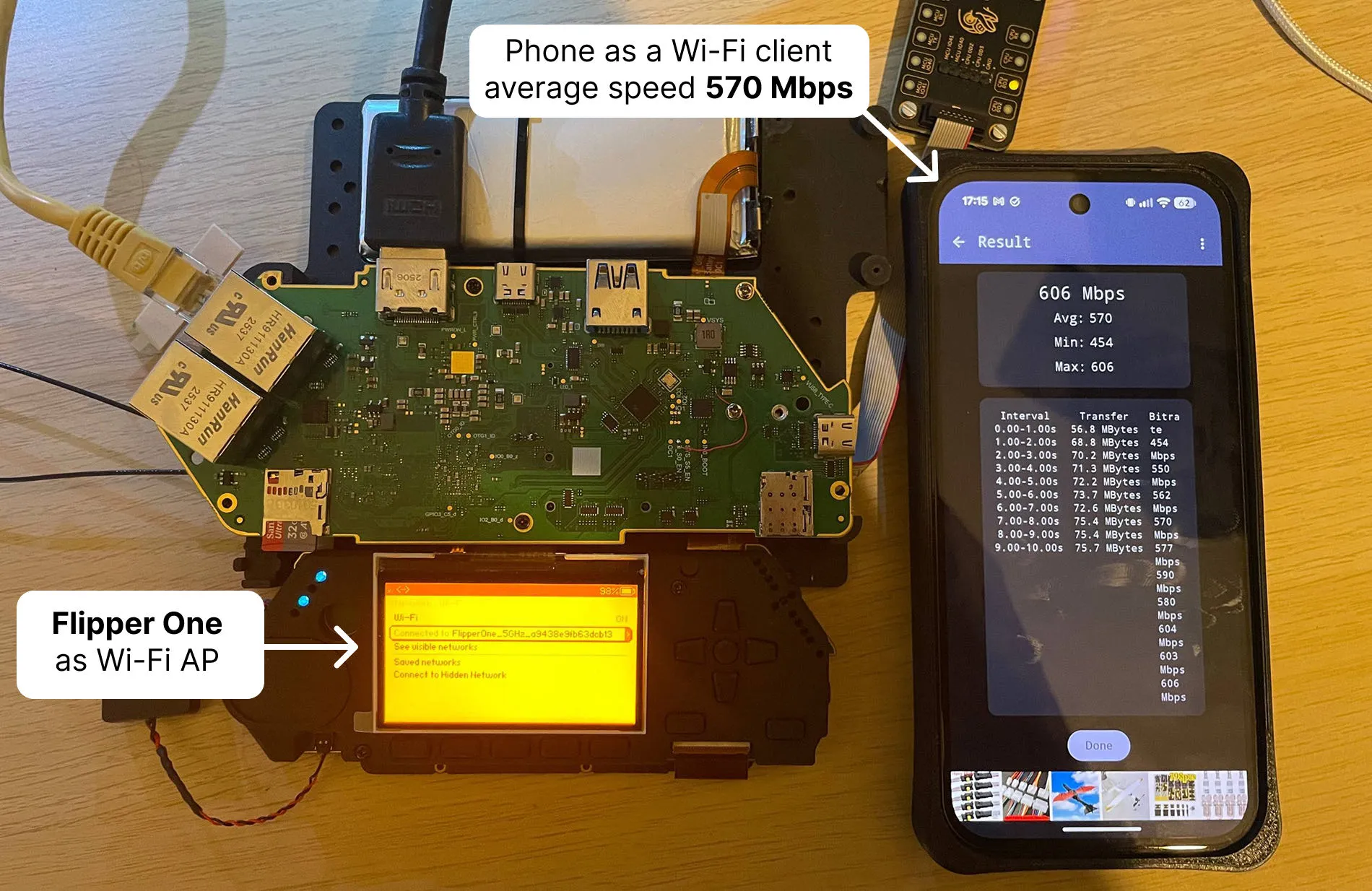
- Added a new systemd target router that creates a Wi-Fi access point. We measured the speed using a phone connected directly to the Flipper One access point with the iPerf3 app, and the result was an average speed of 570 Mbps. Issue #85.
- OS kernel is now based on release 7.1 with patches for USBDP stability introduced by Collabora. See the RK3576 support status.
- U-Boot upstream merged several patches required for Flipper One, including the patch for UFS boot on RK3576 and Ethernet fixes relevant to Flipper One and EVB1. See the patch set.
- Linux OS images received two dependency updates:
- Fixed wpebackend-fdo to work with the updated Mesa. PR #81.
- Brought patched ffmpeg and mpv to have rkvdec decoder working with H264 video. PR #84.
You can get pre-built Linux OS images on our public build server.
⚙️ Mechanics
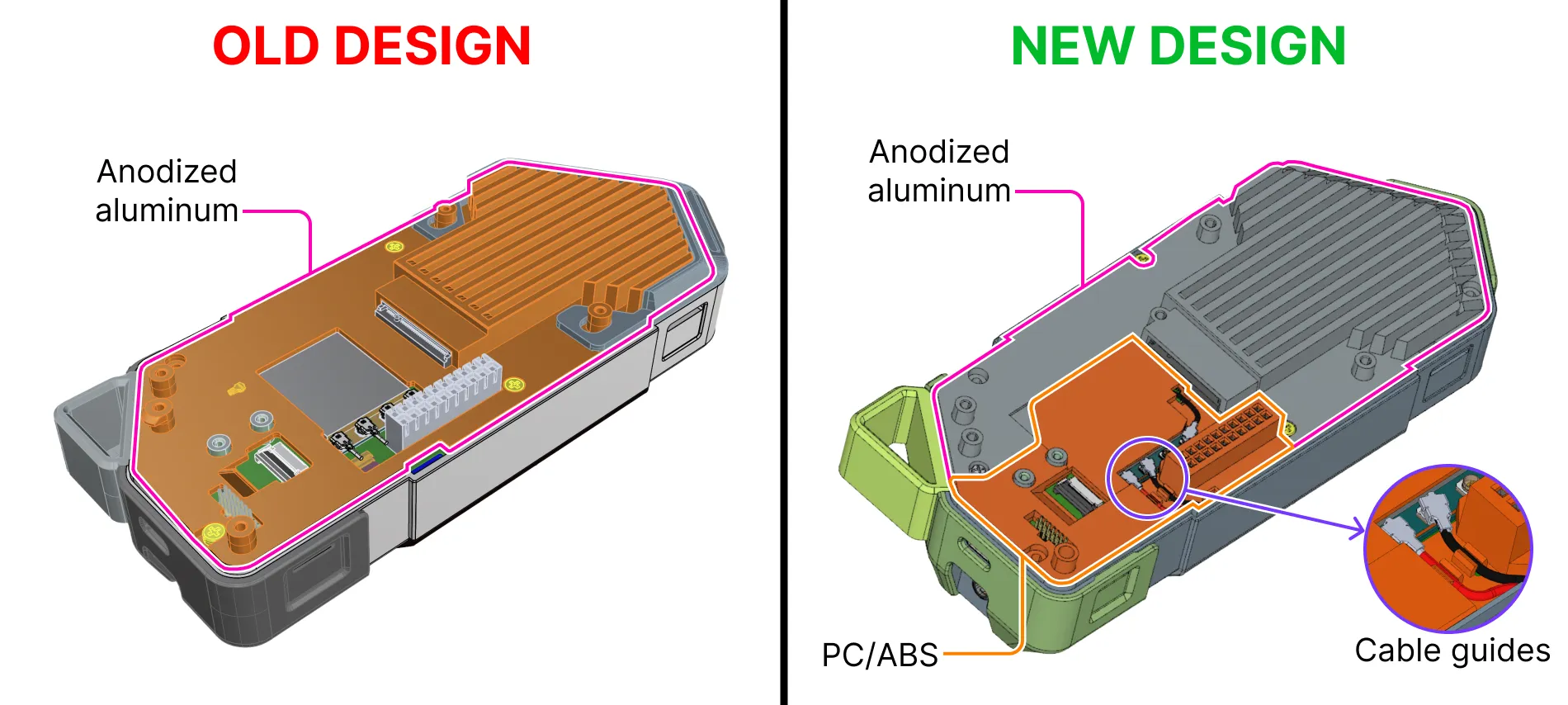
- The heat sink was redesigned to give space to a new plastic part that covers the Wi-Fi module and the GPIO port, and includes guides for antenna cables.
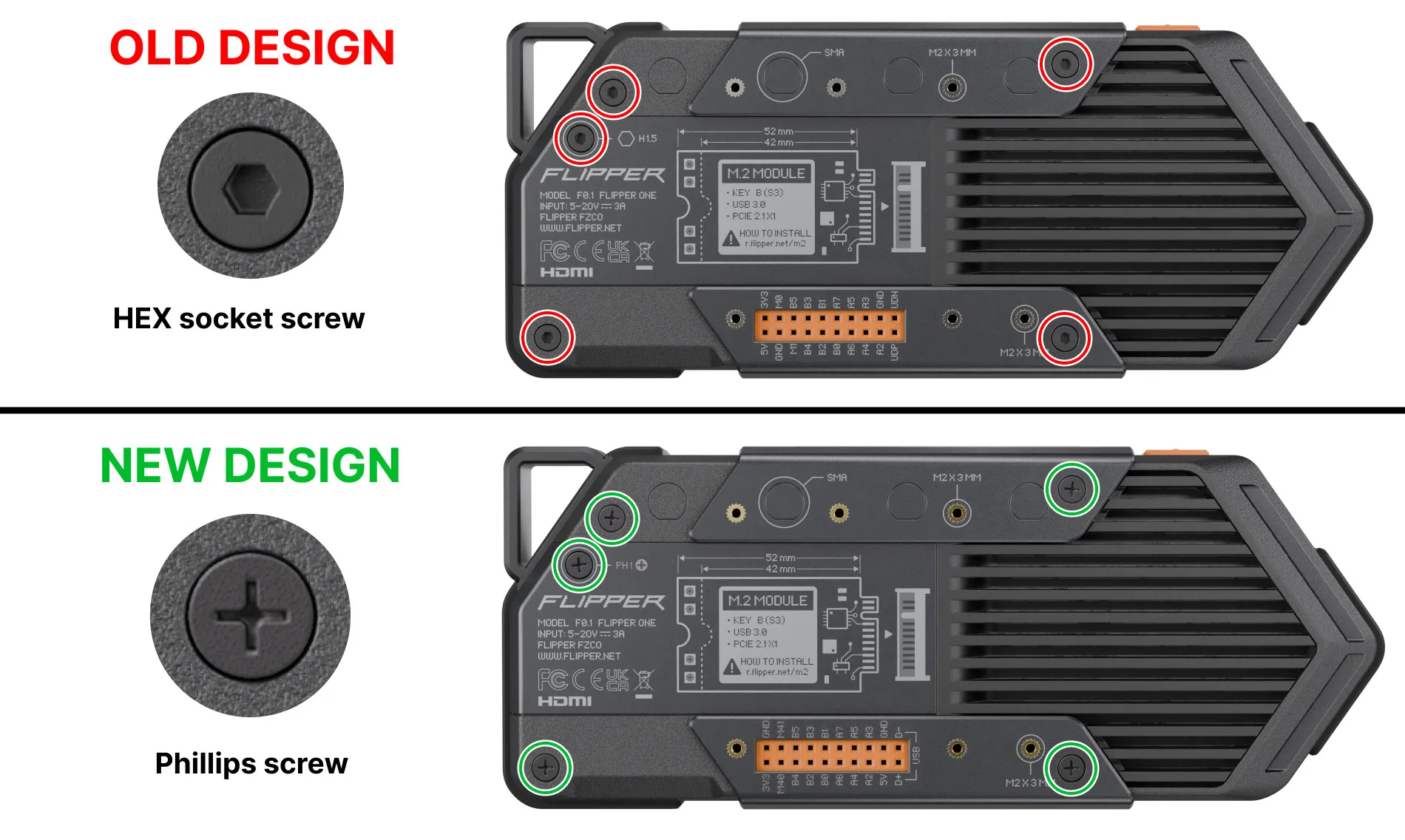
- Flipper One now uses Phillips-head screws to secure the Back Plate and Antenna Rail instead of hex socket screws. This change makes it easier to access the M.2 slot using commonly available screwdrivers.
🔌 Hardware
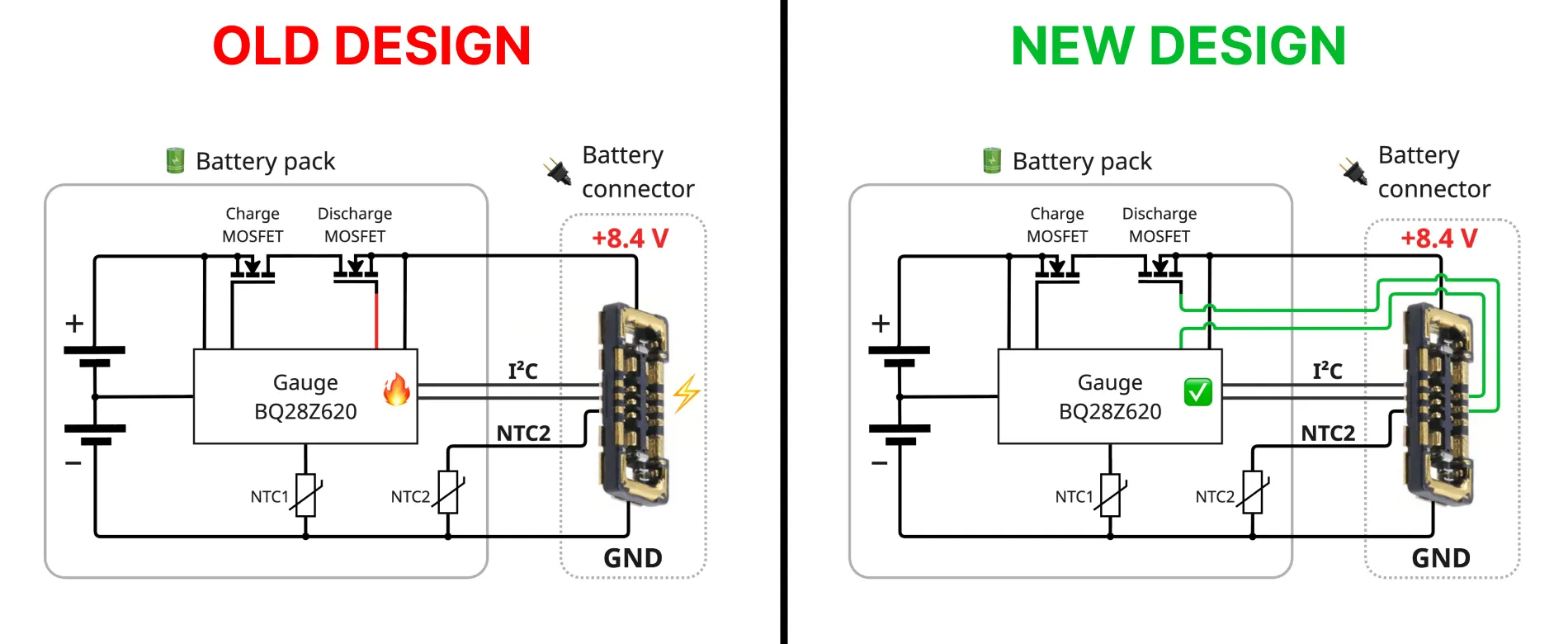
- Now, the battery pack outputs 8.4 V to the battery connector only after connecting to the Main board. The discharge MOSFET gate is connected to the Gauge IC through two pins on the connector and a jumper on the Main board. This improves safety for low-voltage signal pins: I²C (SDA/SCL) and NTC2. The simplified diagrams below show the change.
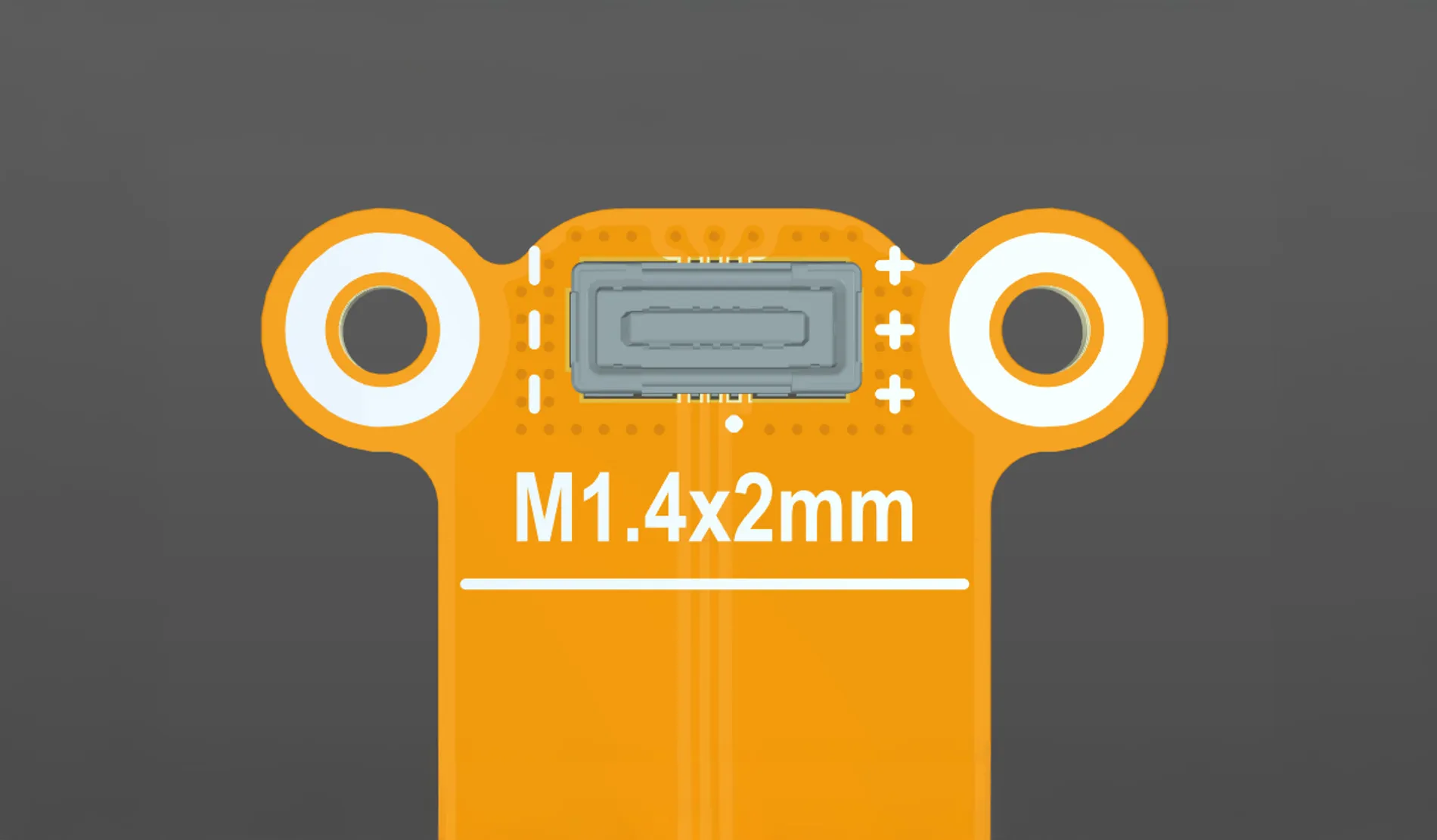
- We introduced a new battery pack connector design with a screw-locking mechanism that keeps the battery from disconnecting. One of the concepts was nicknamed Sid — can you guess why?
🕹️ MCU Firmware
Haptic feedback can now be controlled via intercom using the I2C registers. We continue our work to bring haptic support in Linux.
// Haptic registers
/*
 * 0x0400 + 0: 2 bytes
 * bit 15 - Play effect (1 - play, 0 - stop)
 * bits 14:8 - Effect number (0..123)
 * bits 7:0 - Duration of the effect, ms (0 or 1 - play full effect, 2..255 - play ms)
*/
#define I2C_HAPTIC_PLAY_EFFECT_REG_ADDRESS (0x0400 + 0)
#define I2C_HAPTIC_PLAY_EFFECT_BIT         (15)
#define I2C_HAPTIC_NUM_EFFECT_MASK         (0x7F00)
#define I2C_HAPTIC_NUM_EFFECT_SHIFT        (8)
#define I2C_HAPTIC_DURATION_MASK           (0x00FF)
#define I2C_HAPTIC_DURATION_SHIFT          (0)
🎨 User Interface
You can now switch input between the Flipper One UI and a Linux desktop. Commit 4cd4d55.
📚 Documentation
- The flipperone-linux-build-scripts repository README updated to match the current build process. Thank you, @TriplEight! PR #76.
- The Open tasks page generator now sanitizes task descriptions to produce a clean and readable page. Thanks, @pedrommaiaa. PR #364.
Where you can help
Read our new blog post about FlipCTL and contribute to its development! We're also hiring a FlipCTL architecture lead.
We have many tasks open to the community! See the full list on the 🚧 Open tasks page.
See you in the next Dev Log!